Would this actually work?
I was curious myself.
Before buying a new sofa, it’s worth taking a closer look: what’s still possible? That’s exactly the question I asked myself. With three kids and a dog, stains happen quickly and a sofa can start to look old much faster than it actually is. Buying a new one is always an option, but I wanted to see if there was another way.
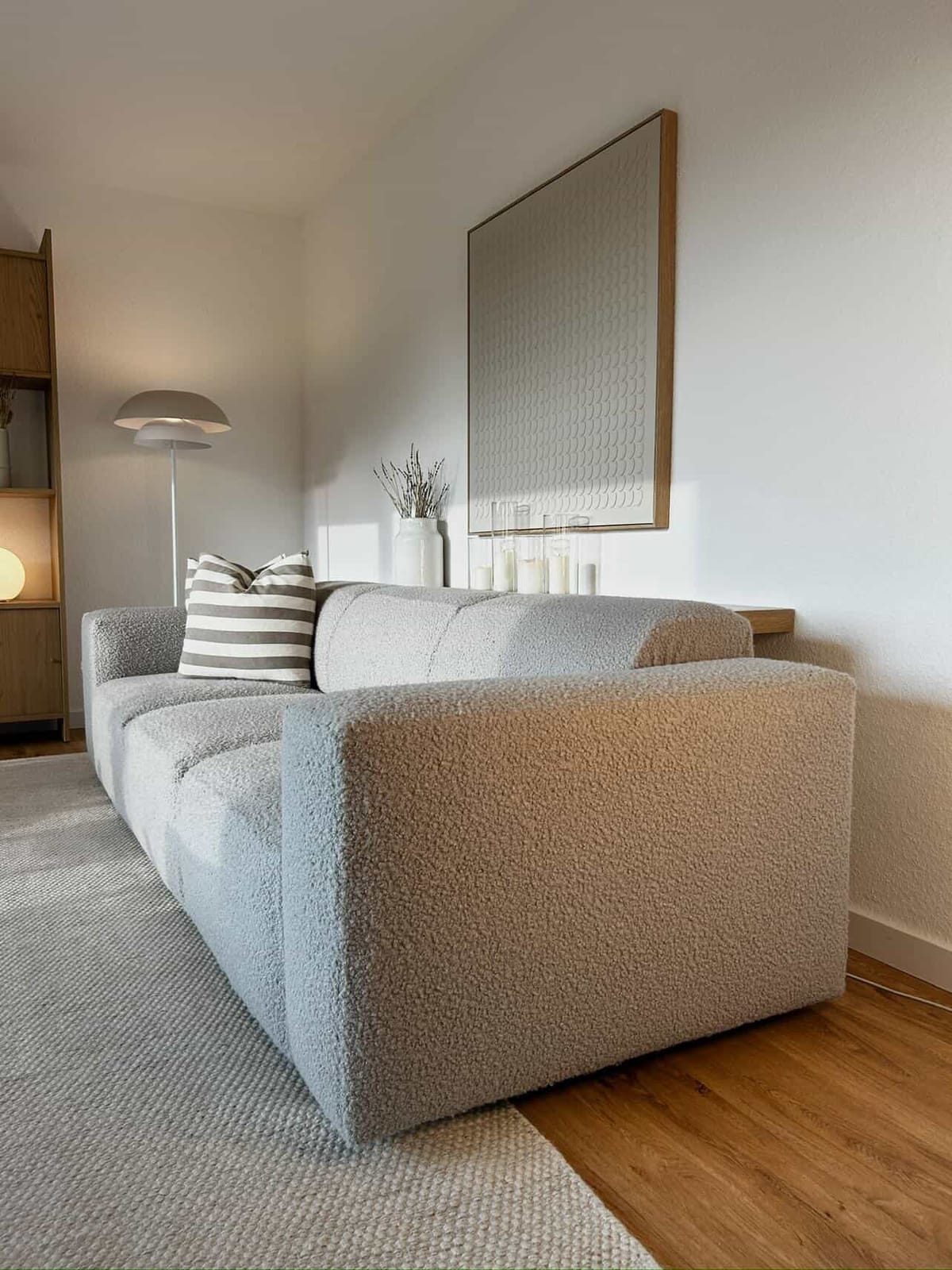
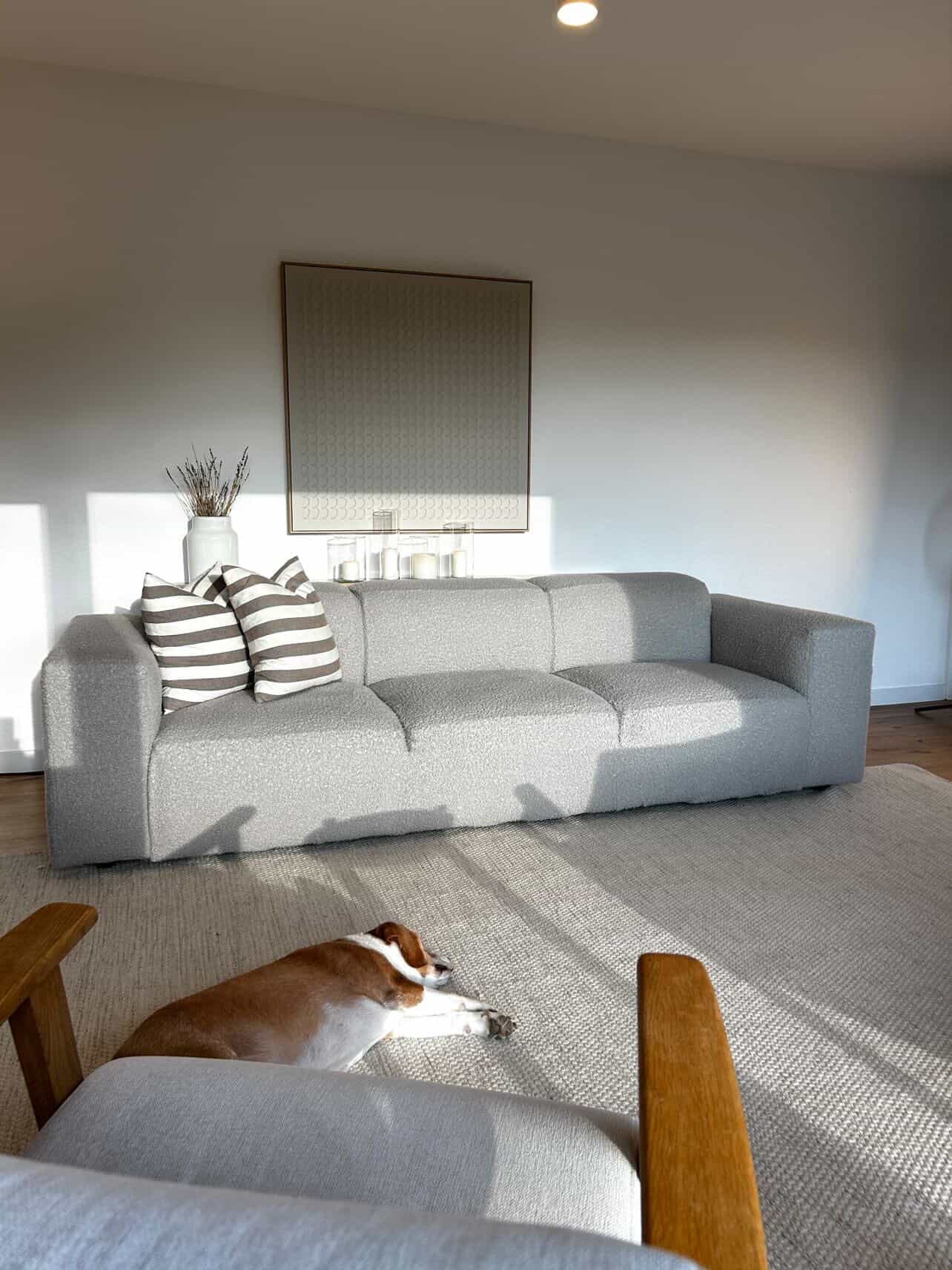
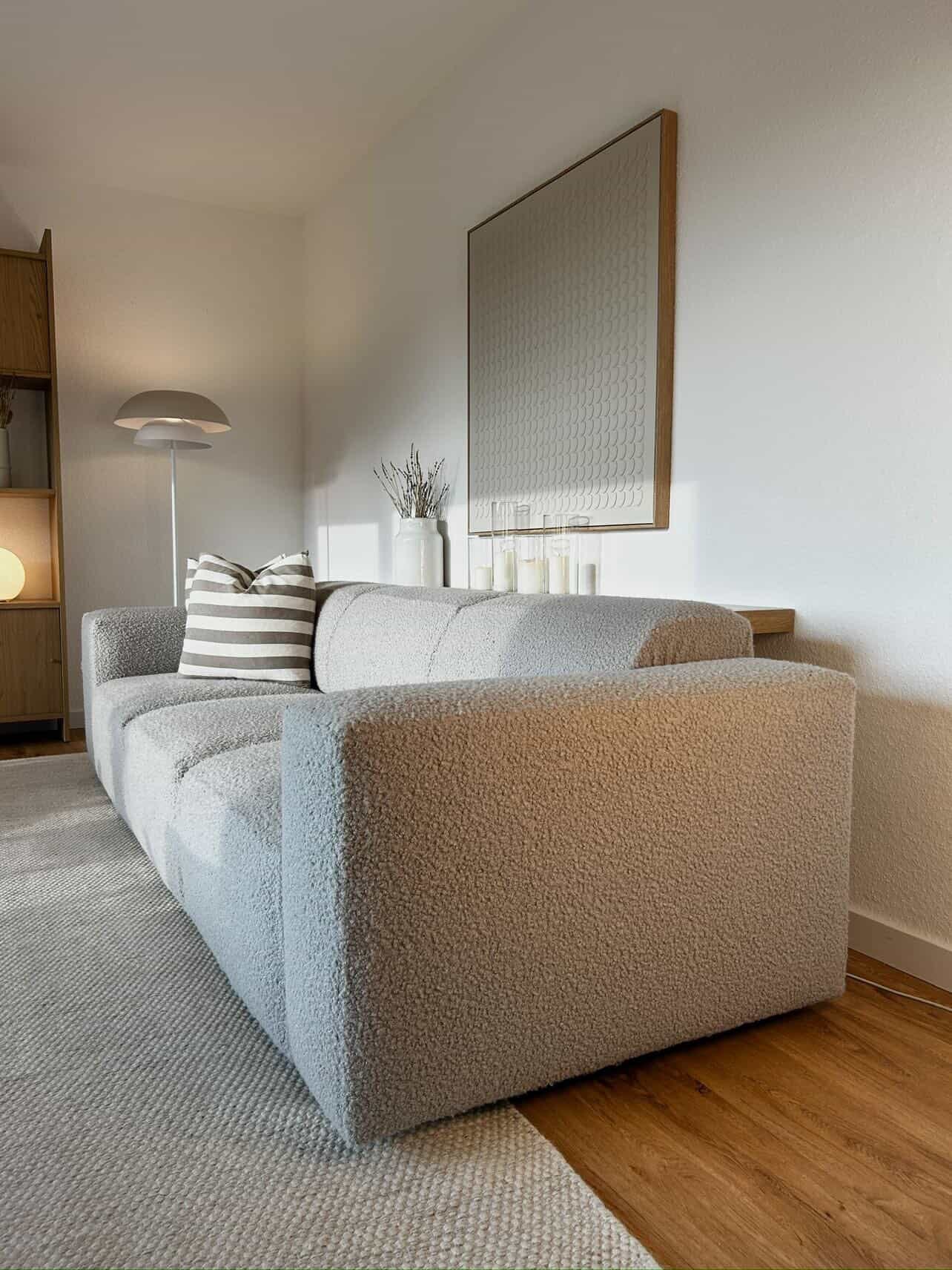
So I decided to reupholster my sofa myself. No experience, no help – I just got started. And the result honestly surprised me: after just 3 hours, my sofa looked like new again – sustainable and budget-friendly.
Materials
• Fabric (around 9 meters, with some extra buffer)
• Staple gun + longer staples
• Measuring tape
• Pen & paper (for sketches)
• Sewing machine (optional, can also be borrowed)
Step by step
Step 1: Measure your sofa
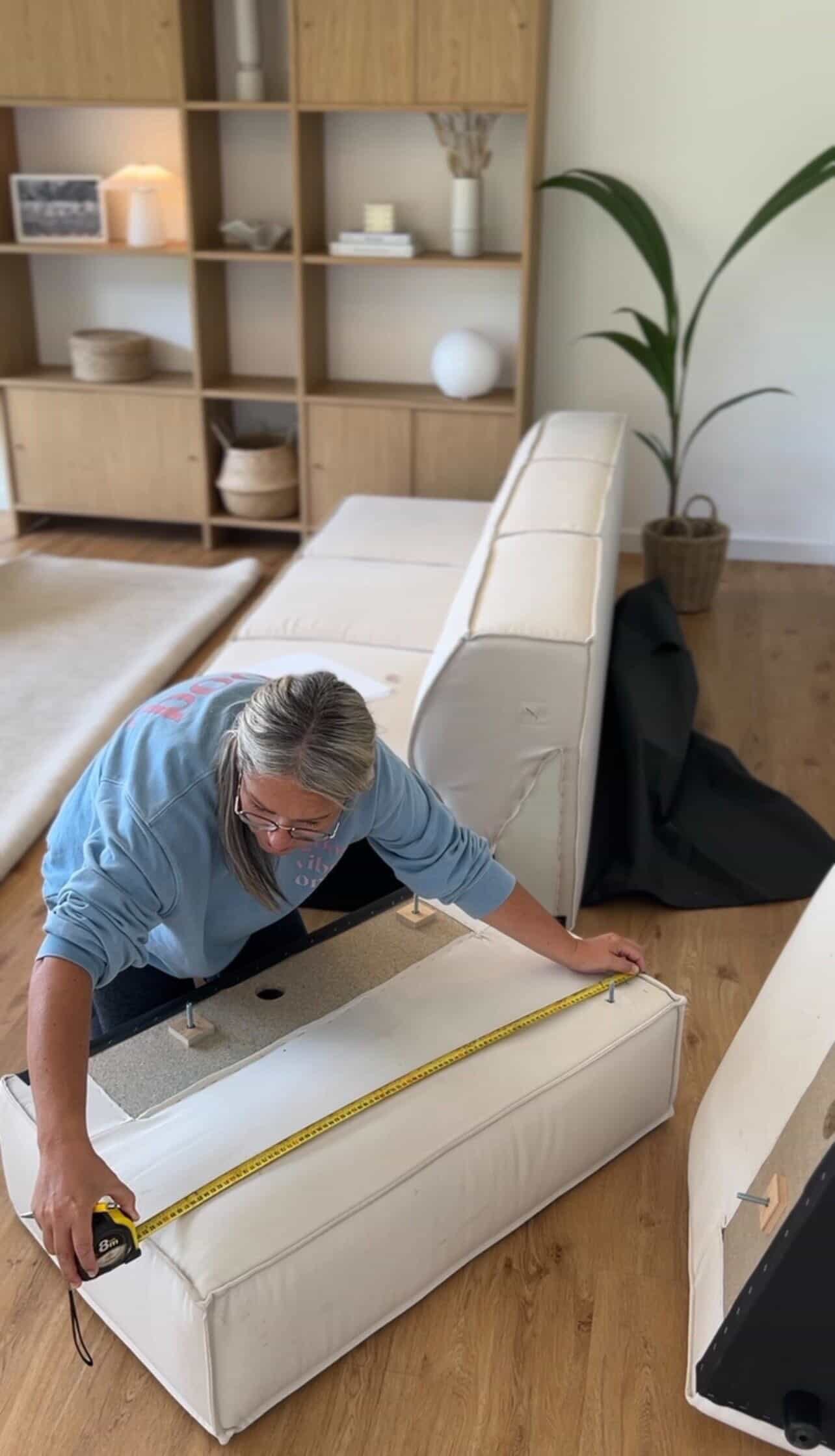
First, measure your entire sofa carefully. Make sure to plan for extra fabric, especially for edges and stapling, where you can add around 40 cm. It’s always better to buy a little more fabric than not enough. I had about 50 cm left over from my 9 meters in the end. If you still have original measurements from when you bought the sofa, they can be helpful as a reference.
Step 2: Choosing the right fabric
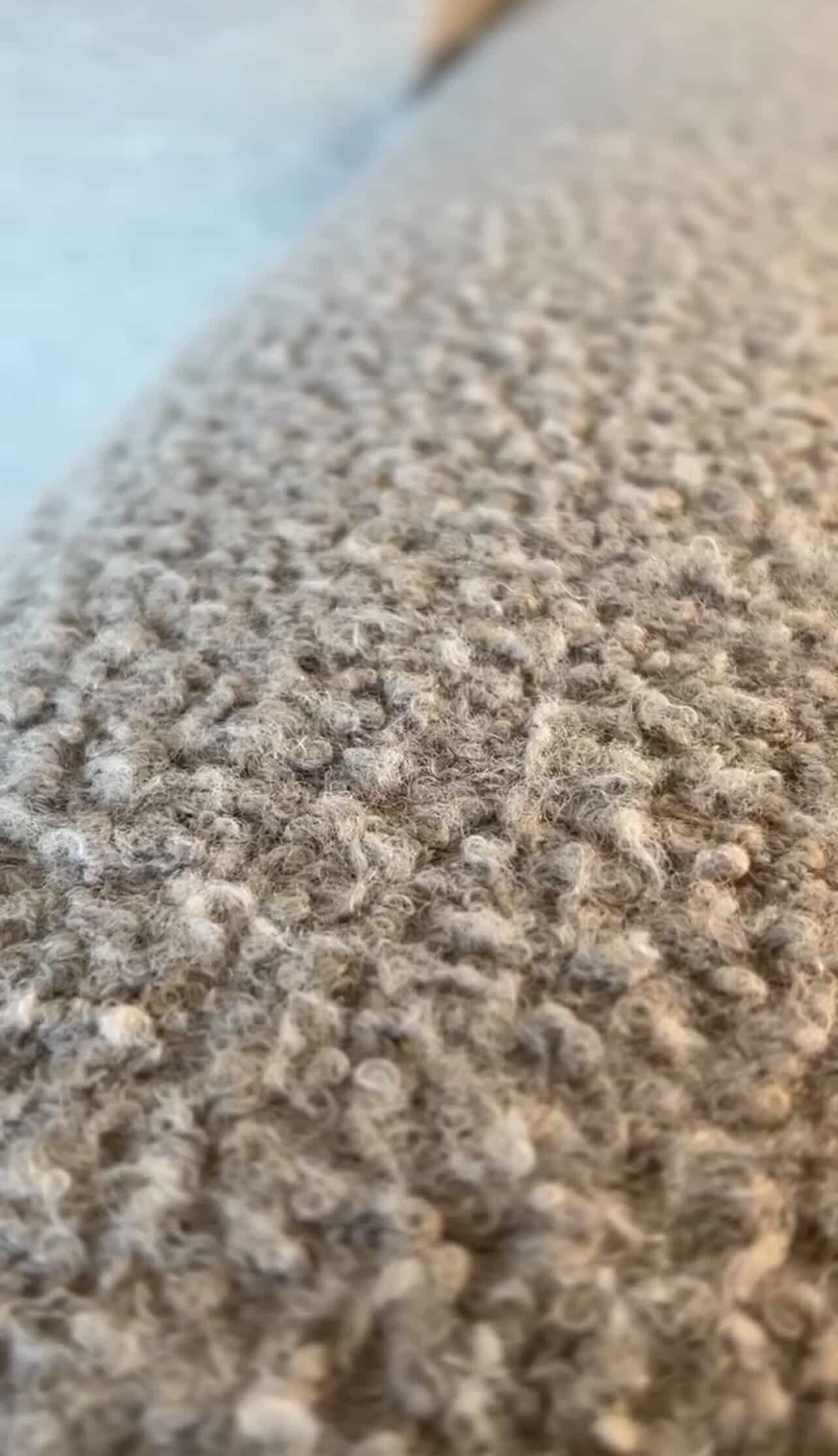
I chose a teddy fabric because it’s soft, cozy, and slightly stretchy. This makes it much easier to pull tight and smooth out. For sofas in particular, this is a big advantage, as stiffer fabrics tend to wrinkle more easily and are harder to work with.
Step 3: Take the sofa apart
Don’t worry, this sounds more complicated than it is. Most sofas can actually be opened quite easily. Depending on the model, there may be zippers, stapled sections, or separate parts. My sofa had a zipper underneath, and once I opened it, I was able to simply unscrew the side panels.
Step 4: Make sketches
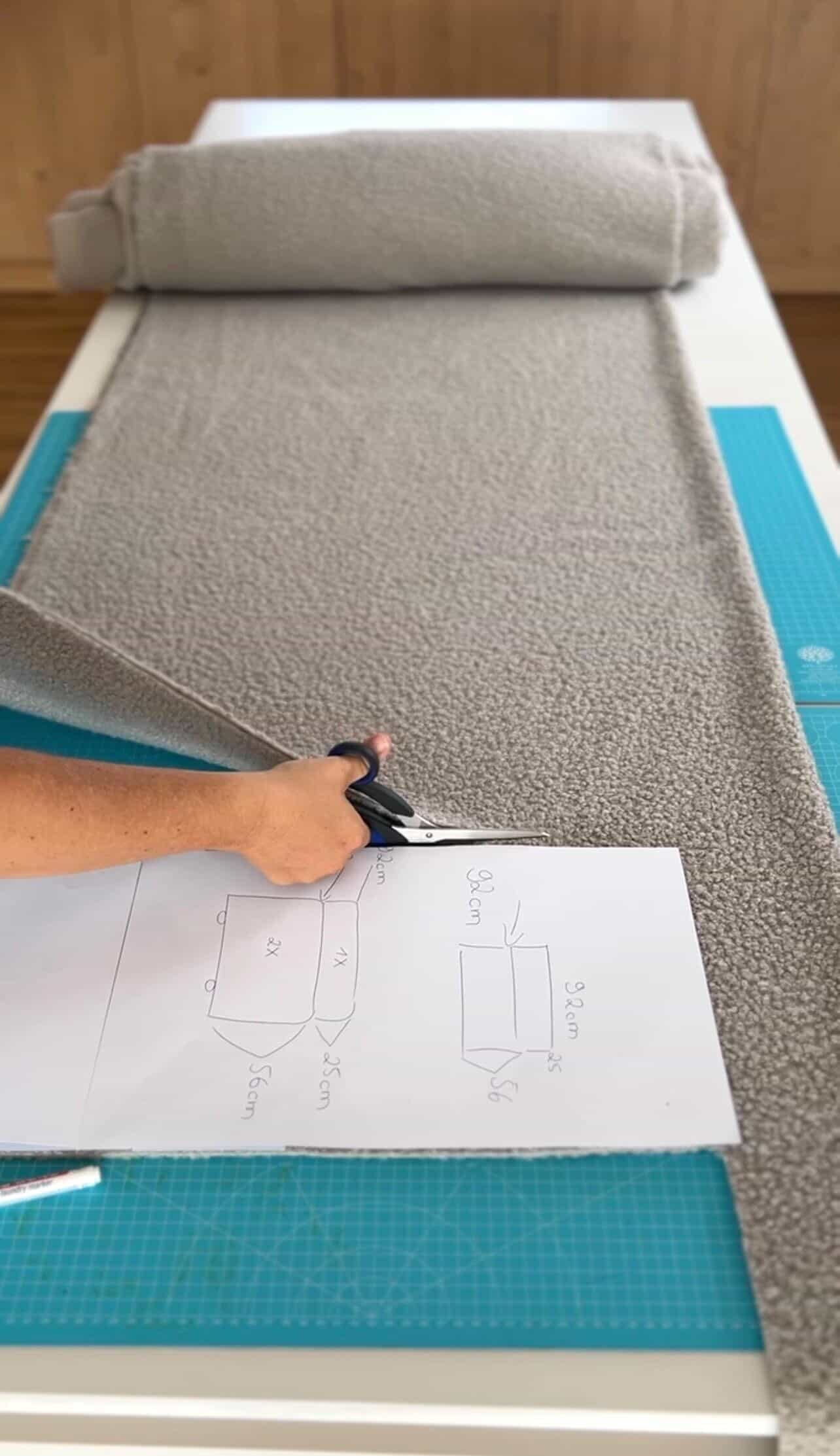
For any parts that need sewing, measure each section carefully and draw a simple sketch. Make sure to include about 1 cm seam allowance. I cut the larger pieces directly on the sofa, which worked really well. It’s a good idea to keep your sketches so you can easily reupholster your sofa again in the future.
Step 5: Sewing (if needed)
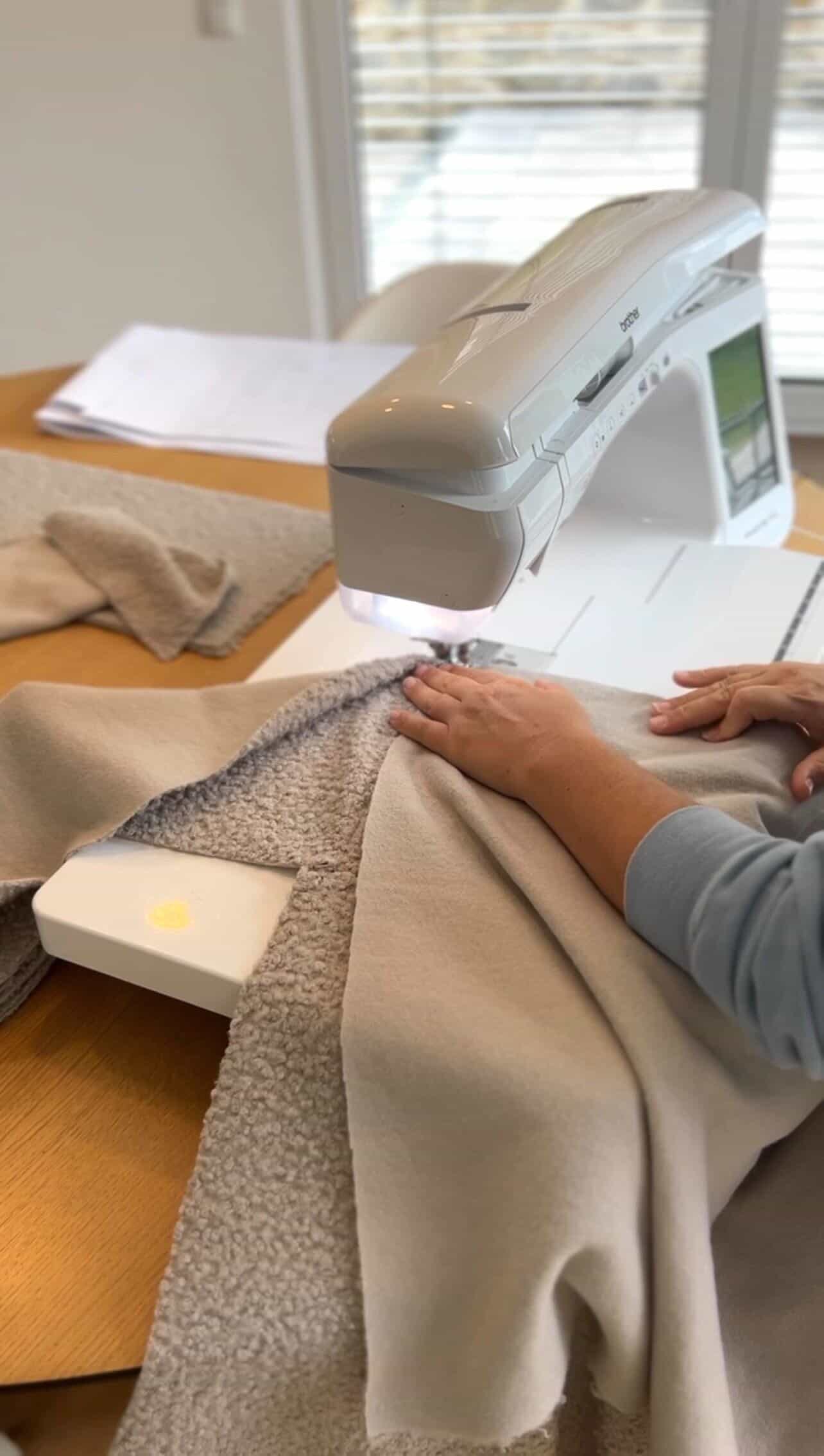
Not every part needs to be sewn. In my case, only the side panels required it. I also lightly sewed the inner edges of the seat cushions, but that step is optional. You can simply place the fabric over and staple it directly. If you don’t have a sewing machine, you can usually borrow one from friends or family.
Step 6: Upholstering & stapling
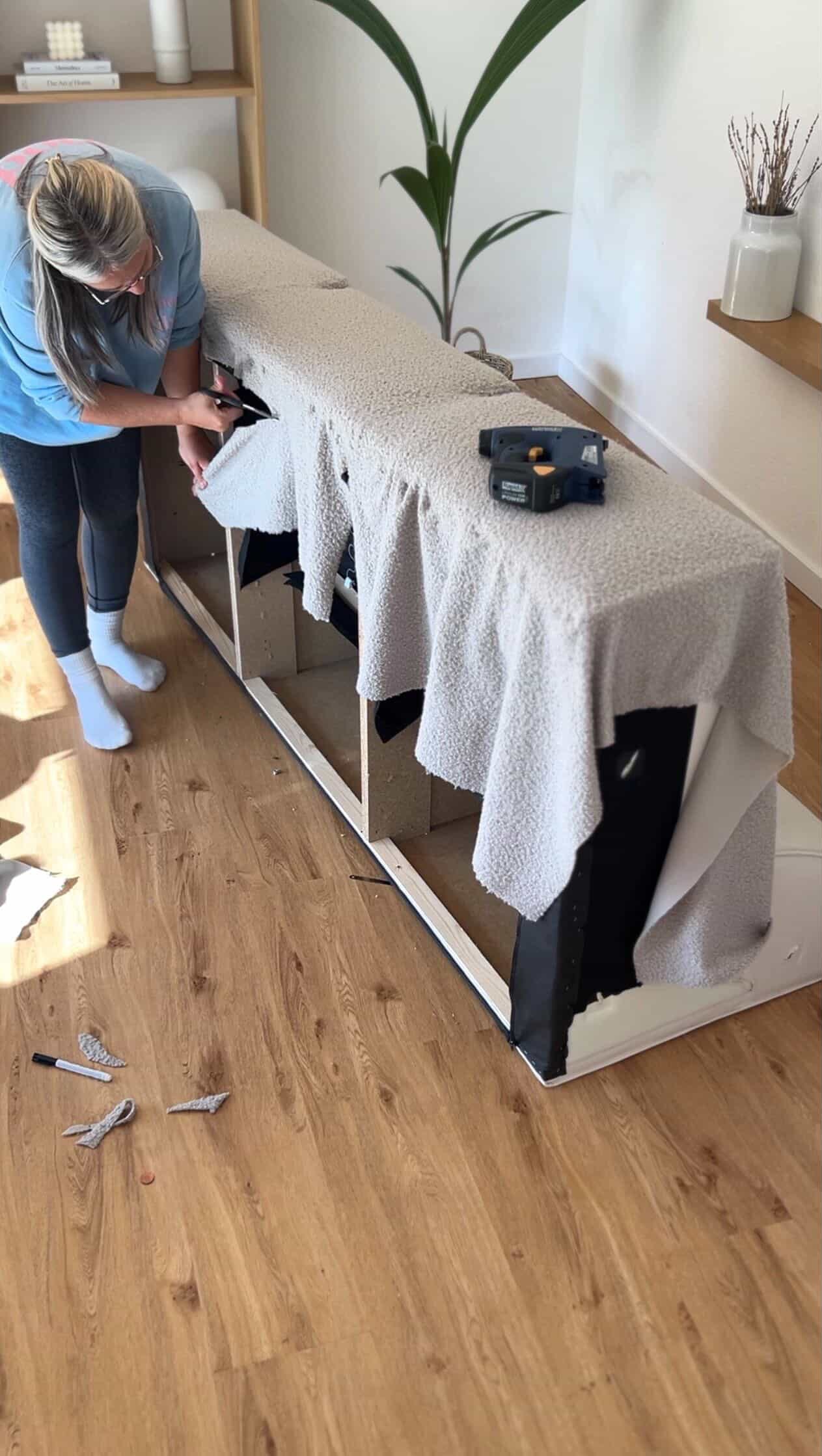
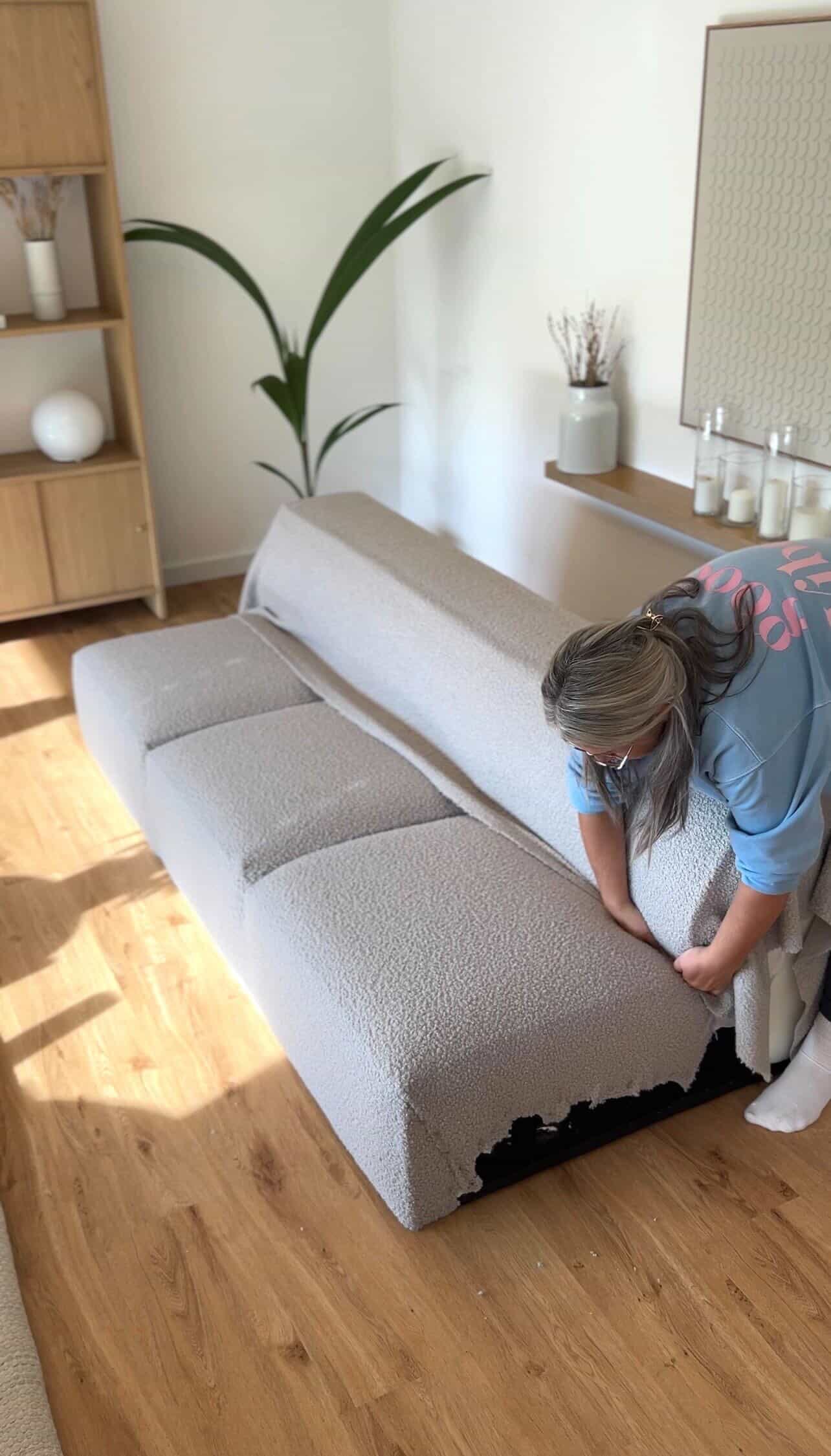
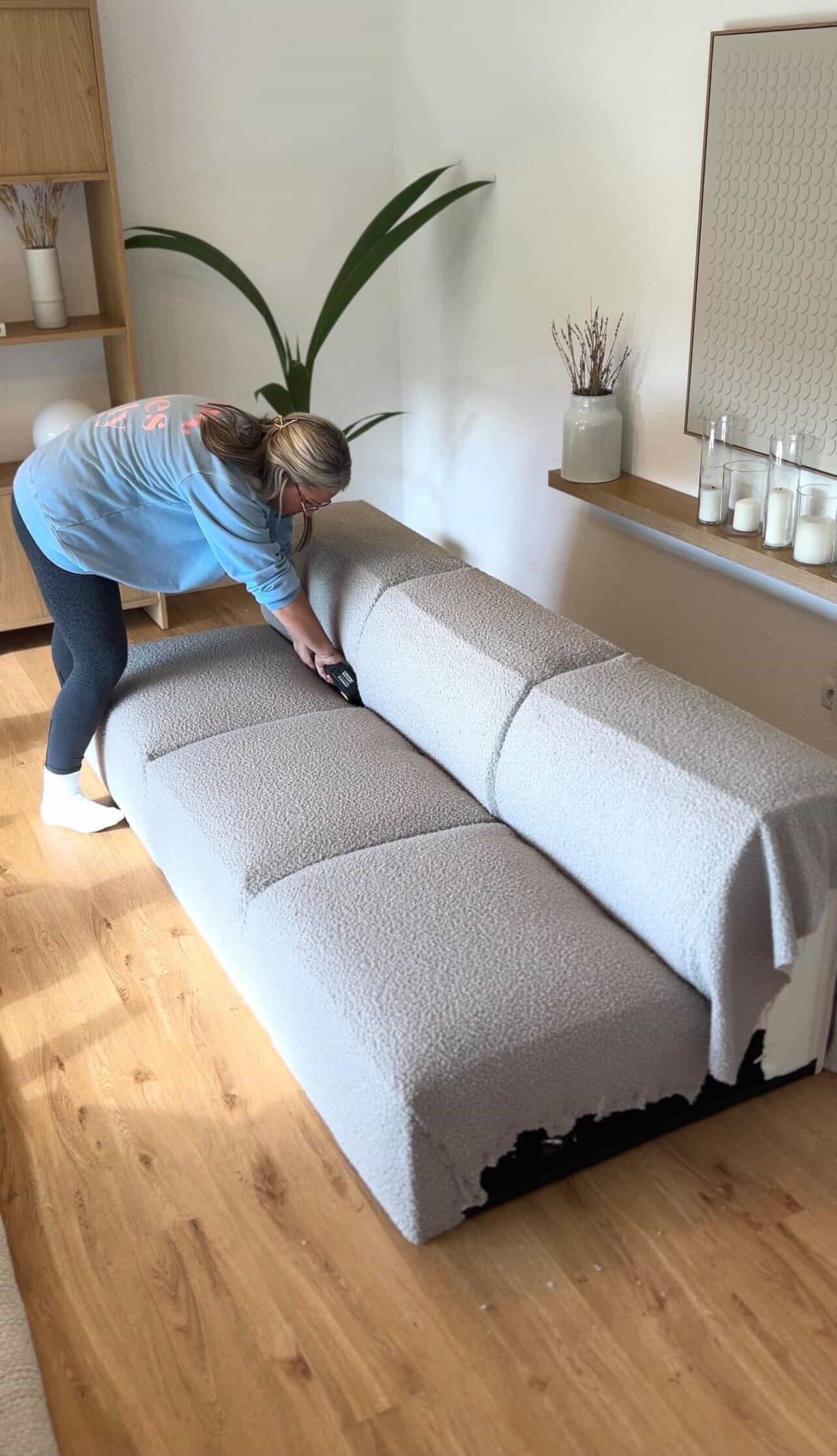
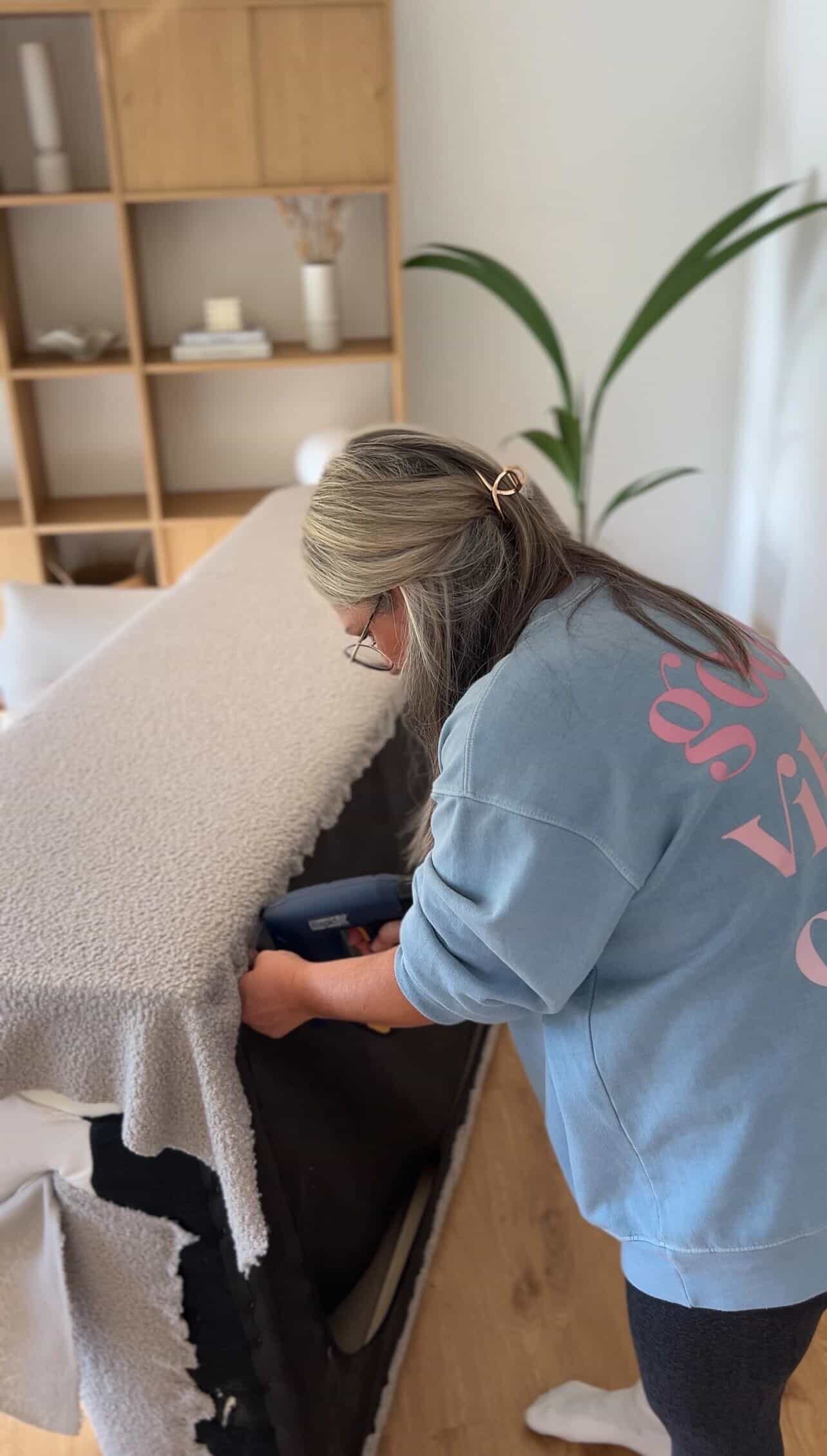
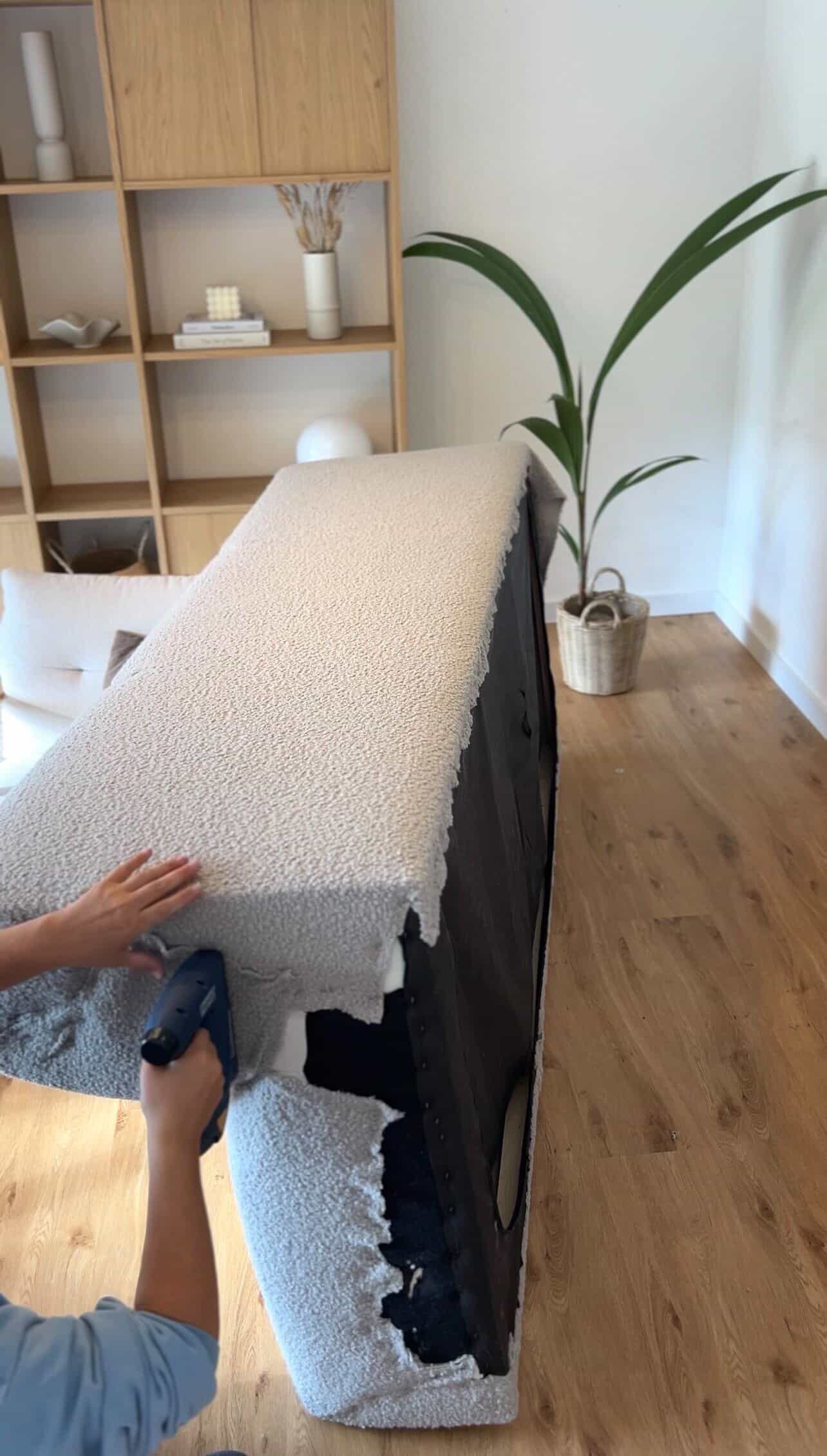
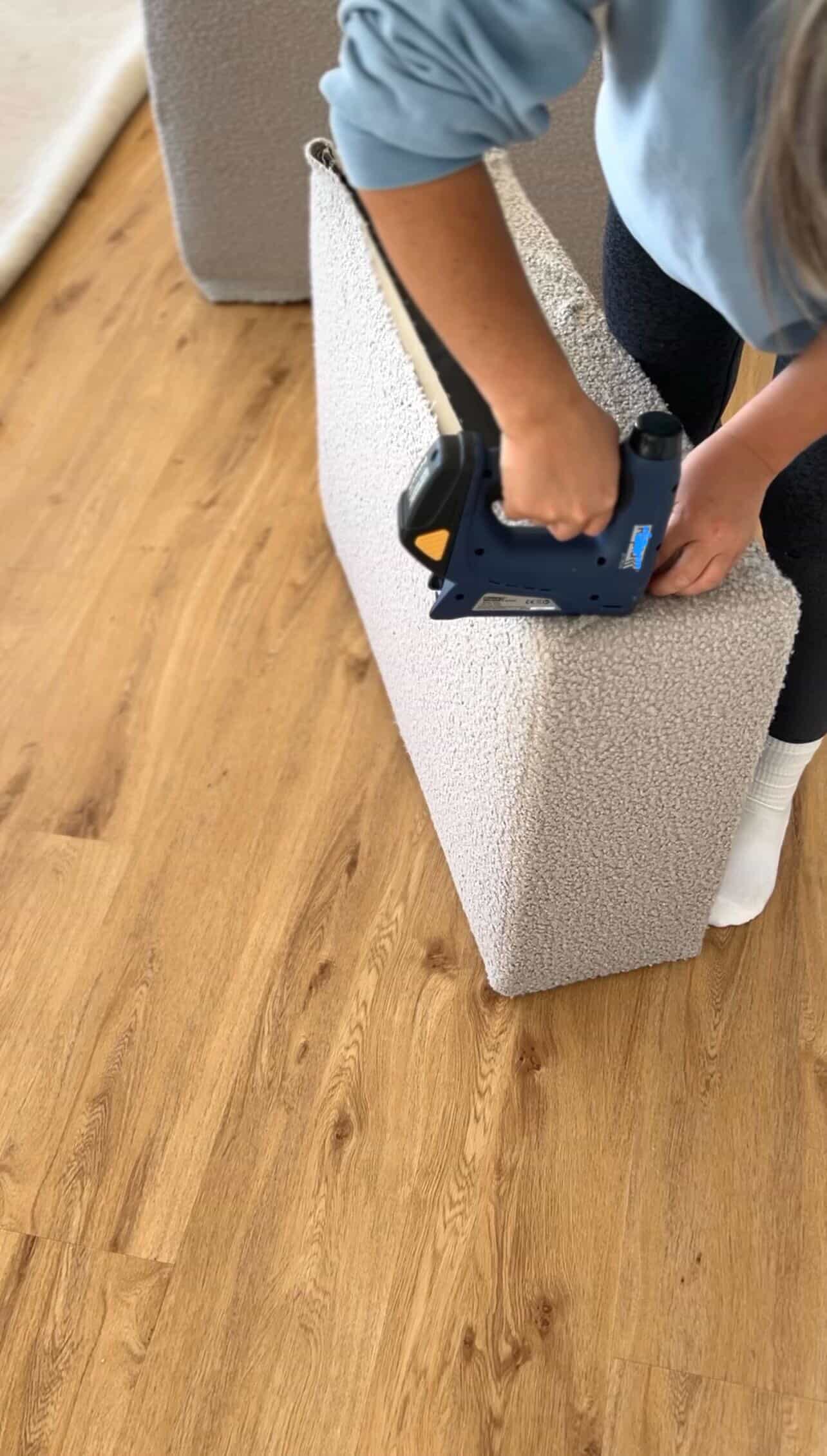
Now comes the most important part. Make sure your sofa has a wooden base so the staples can hold properly. Pull the fabric tightly over each section and work step by step as you secure it. It’s important to work evenly and keep smoothing the fabric as you go to avoid wrinkles. Place the staples close together so everything stays firm and secure.
Conclusion
Recover a sofa is easier than you might think, much cheaper than buying a new one, and a great sustainable way to give your home a fresh look.
And the best part: you can completely customize your sofa to match your style. Cozy, modern, and like new – for a fraction of the price.
If you have any questions or aren’t sure whether your sofa is suitable, feel free to reach out to me on Instagram (@interior_bykatja). You can also send me a photo – I’m always happy to help.

Creator: Katja
Instagram: @interior_bykatja